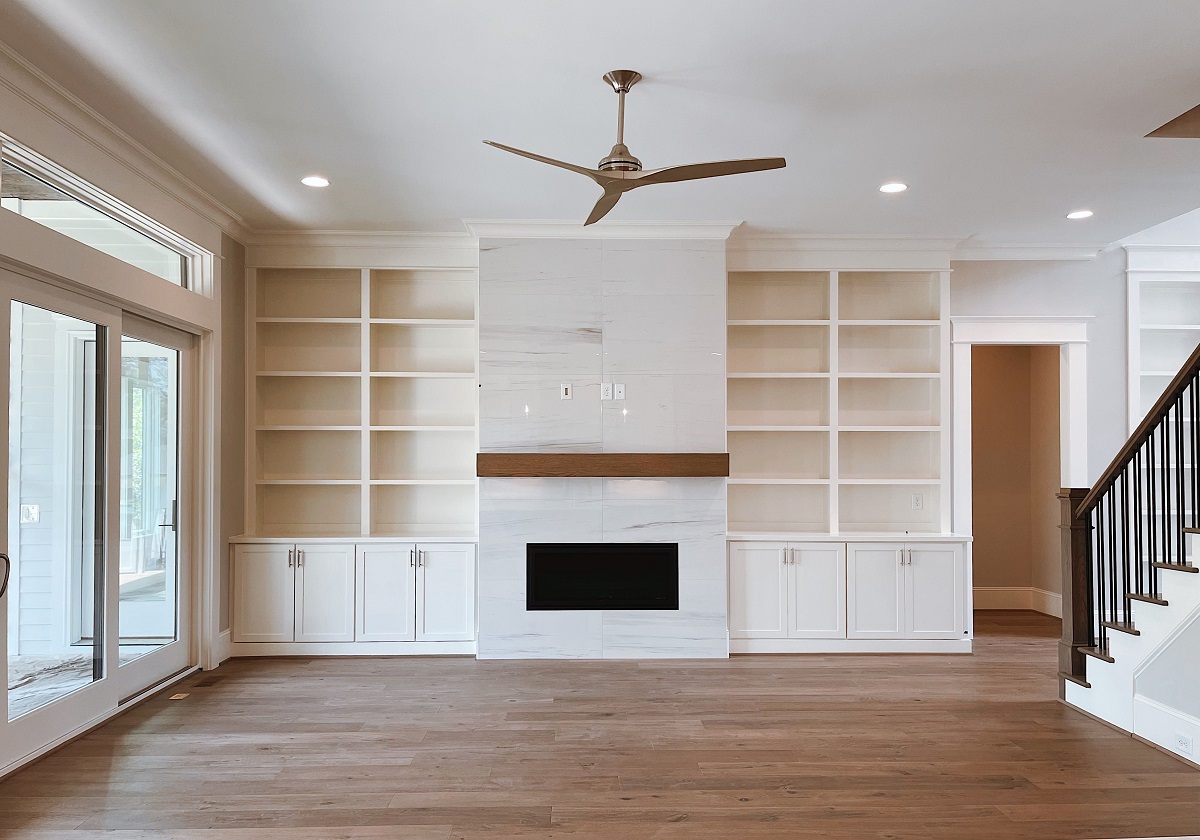
Highlights:
- Built-ins win because they’re custom-fit. Unlike furniture, they use every inch of a space, including awkward corners and vertical room that standard pieces leave empty.
- Planning matters more than building. Measuring carefully, mapping outlets and trim, and deciding what each shelf will actually hold prevents costly mistakes once construction starts.
- Small, overlooked spots make the best built-in locations. Areas like under the stairs, around a fireplace, or along a hallway often have the most untapped storage potential.
- Anchoring to wall studs is non-negotiable. This step is what actually makes a cabinet “built-in” rather than a tall, unsecured box that risks tipping.
- Finishing details and organization determine the final result. Trim work, matched paint, quality hardware, and smart interior organization are what separate a polished built-in from one that looks like an afterthought.
If you live in a smaller home, you already know the struggle. Closets fill up fast, counters become dumping grounds, and every square foot feels precious. The good news is that built-in cabinets can completely change how your space functions without requiring you to knock down a single wall. Whether you’re working with a tiny kitchen, a cramped hallway, or an awkward nook under the stairs, built-ins turn dead space into smart, usable storage. Let’s walk through exactly how to plan, design, and build them so they actually work for your home.
Why Should You Choose Built-In Cabinets Over Furniture?
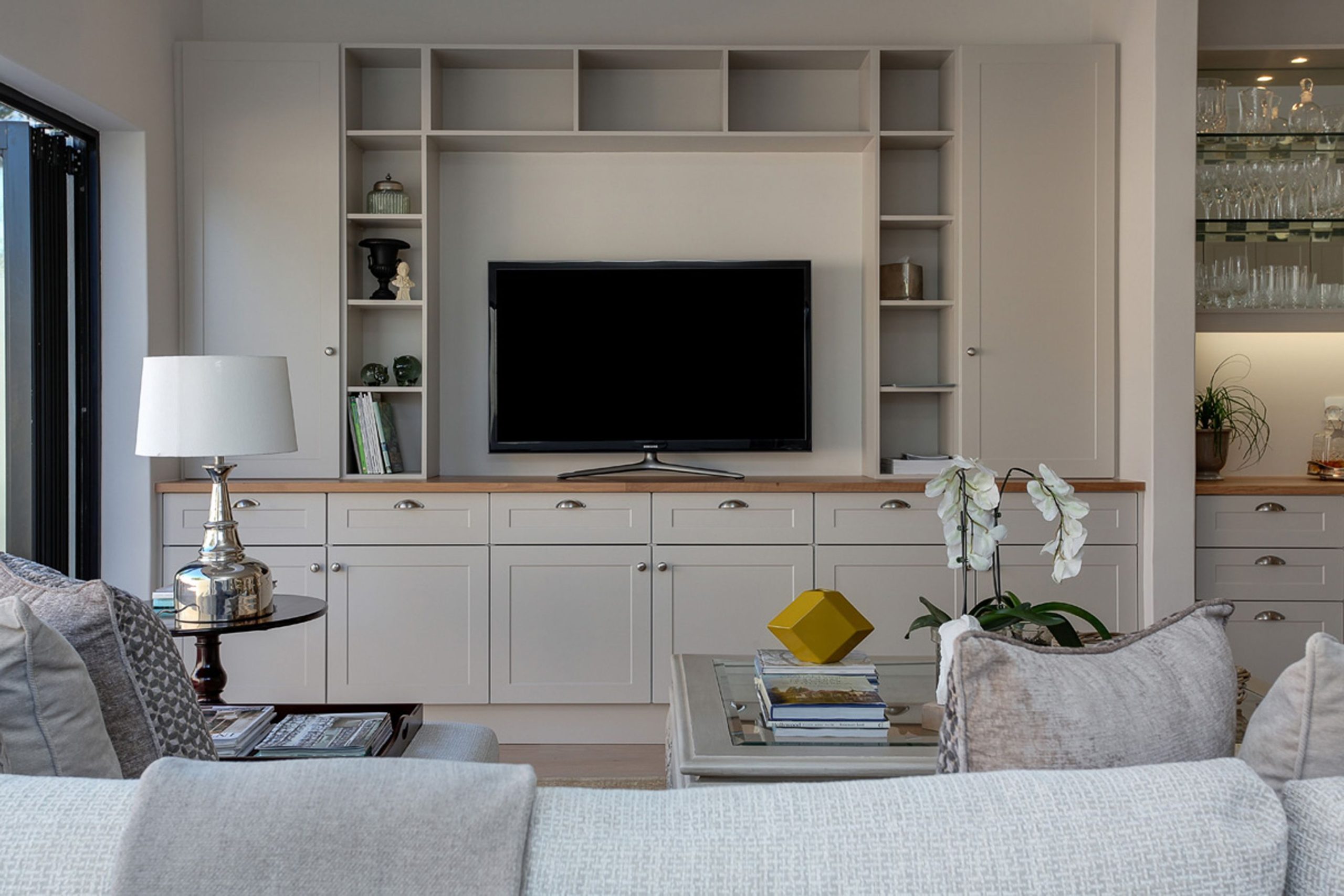
Freestanding furniture is easy to buy, but it rarely fits a space perfectly. There’s almost always a gap behind it, beside it, or above it where dust collects and storage potential goes to waste. Built-in cabinets are designed around your exact dimensions, which means every inch gets used.
Here’s what makes built-ins worth the extra effort:
- They use vertical space efficiently, going floor to ceiling instead of stopping at a standard 30 or 36 inches
- They eliminate awkward gaps since they’re custom-fit to your walls, corners, and ceiling height
- They create a streamlined, intentional look instead of a cluttered mix of furniture pieces
- They add resale value to your home since buyers see built-ins as a permanent upgrade
- They can be designed for a specific purpose, like hiding laundry supplies or organizing kids’ toys
For anyone trying to stretch a small footprint, this level of customization is hard to beat.
What Tools and Materials Do You Actually Need?
Before you start measuring walls and sketching designs, get your supply list together. You don’t need a professional workshop, but a few key tools will make the process much smoother.
Basic tools to have on hand:
- A tape measure and level (a laser level is even better for long runs)
- A circular saw or table saw for cutting panels
- A drill and driver with various bits
- A pocket hole jig for clean, strong joints
- Wood glue and clamps
- A stud finder to locate framing in your walls
- Sandpaper or a sander for smooth finishes
For materials, plywood is generally the best choice for cabinet boxes because it’s strong and resists warping. Look for cabinet-grade plywood, usually three-quarter inch thick for the main structure, since thinner sheets tend to flex and sag once they’re loaded with books or dishes. MDF works well for face frames and doors if you plan to paint, since it has a smooth surface that takes paint nicely and doesn’t show wood grain through the finish. Solid wood is great for shelving and trim where strength and appearance both matter, especially if you’re leaving the wood exposed with a stain rather than paint.
It’s worth budgeting a little extra for quality hardware too. Cheap hinges and slides tend to wear out fast, and replacing them later means taking doors and drawers apart all over again. Spending more upfront on soft-close hinges or full-extension drawer slides almost always pays off in day-to-day use.
How Do You Plan the Layout Before You Start Building?
This is the step people rush through, and it’s the one that determines whether your project looks professional or feels like an afterthought. Planning carefully now saves you from costly mistakes later.
Start by measuring the space three times: width, height, and depth at multiple points. Walls are rarely perfectly straight, so check the top, middle, and bottom of the space. Note where any outlets, switches, vents, or trim work might interfere with your design.
Next, think about function before form. Ask yourself what’s actually going to live in this cabinet. Books need different shelf spacing than folded towels. Bulky items like board games or appliances need deeper compartments. It also helps to think about who’s using the space. A cabinet in a kids’ playroom needs lower shelves within easy reach, while a cabinet meant to hide away seasonal items can rely more heavily on the top sections that are harder to access.
Sketch out a rough layout with these uses in mind, including:
- Shelf height and spacing based on what you’re storing
- Whether you need drawers, doors, or open shelving
- How much depth you can spare without crowding the room
- Whether the cabinet will run floor to ceiling or stop partway up
- How the new cabinet will affect traffic flow through the room
Don’t forget to account for the swing of doors and the pull of drawers. In a tight hallway or small bedroom, a door that swings too far into the walking path can turn a nice storage solution into a daily annoyance. Sliding doors or simple open shelving sometimes make more sense in these tighter quarters.
A lot of homeowners overlook how built-ins fit into a bigger picture of home improvement. These projects are part of the broader category of home upgrades that simplify family living, since they reduce clutter, create dedicated spots for everyday items, and make daily routines smoother for everyone in the house.
Where Are the Best Spots for Built-Ins in a Small Home?
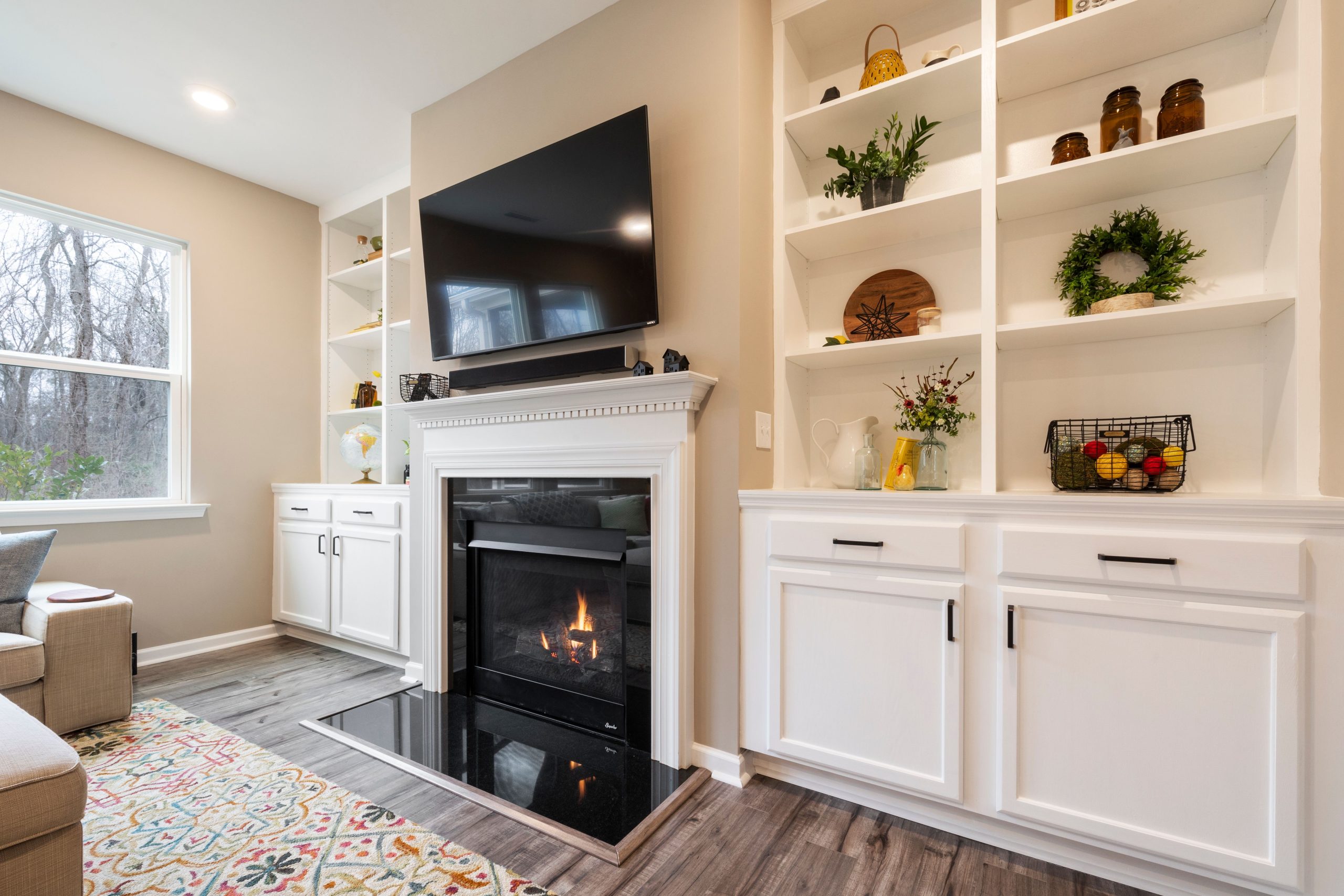
Not every wall is created equal when it comes to storage potential. Some spots are practically begging for a built-in, even if they don’t look like obvious storage zones at first glance.
Consider these often-overlooked locations:
- Around a fireplace, where flanking cabinets can frame the mantel and store media equipment
- Under a staircase, which is one of the most wasted spaces in any home
- In a hallway, where a slim run of cabinets adds storage without narrowing the walkway
- Flanking a window, especially in a living room or bedroom
- Above a doorway, perfect for items you don’t need daily access to
- In a mudroom or entryway, for shoes, bags, and seasonal gear
Small spaces benefit the most from this kind of thinking because every wall has to earn its place. A built-in that doubles as a bench, a bookshelf, or a hidden pantry does more work than a plain wall ever could.
How Do You Build the Cabinet Boxes Step by Step?
Once your plan is solid, it’s time to get into the actual construction. Here’s a straightforward process to follow.
First, build the basic box structure using plywood. Cut your side panels, top, and bottom to size, then join them using pocket screws or dado joints for extra strength. Square corners matter here, so check with a carpenter’s square before the glue sets.
Second, install a back panel. This is often a thinner piece of plywood that adds rigidity to the whole structure and gives you something to anchor into the wall.
Third, add face frames if you want a more finished, furniture-like look. Face frames cover the raw plywood edges and give doors and drawers something sturdy to attach to.
Fourth, cut and install your shelves. Adjustable shelving with shelf pins gives you flexibility down the road, while fixed shelves add more structural support if you’re storing heavier items.
Fifth, secure the cabinet to the wall. This step is non-negotiable for built-ins, especially tall units. Locate wall studs and screw through the back panel into the framing. This is what makes the cabinet “built-in” rather than just a tall, unanchored box that could tip.
What Finishing Touches Make the Biggest Difference?
The construction is only half the story. The details are what make a built-in look like it was always meant to be there.
Trim work is the biggest factor. Adding crown molding at the top and base molding at the bottom blends the cabinet into the wall and ceiling, hiding any small gaps from uneven surfaces. Caulking the seams where the cabinet meets the wall has the same effect.
Paint or stain should match or intentionally contrast with your existing trim and walls. A built-in painted the same color as the wall trim looks like part of the architecture, while a bold contrasting color makes it a feature piece.
Hardware matters more than people expect. Knobs, pulls, and hinges should match the overall style of the room, whether that’s modern, traditional, or somewhere in between.
A few other finishing details worth considering:
- Soft-close hinges and drawer slides for a quieter, higher-end feel
- Interior lighting for deep or dark cabinets
- Adjustable feet or a leveling base if your floor isn’t perfectly flat
- Glass-front doors for display pieces mixed with closed storage for clutter
How Do You Maximize Storage Once the Cabinets Are Built?
Building the cabinet is just the start. How you organize the inside determines whether it actually solves your storage problem or just becomes a bigger, fancier mess.
Some practical organizing strategies:
- Use bins and baskets to group small items instead of letting them roll around loose
- Install pull-out drawers in lower cabinets so you’re not crouching and digging
- Add dividers for vertical storage of trays, cutting boards, or folders
- Label shelves or bins if multiple family members use the same storage area
- Reserve the highest shelves for items used only occasionally, like holiday decorations
This is also where regular upkeep comes in. Built-ins are a long-term investment, and a bit of routine maintenance, like tightening hinges, checking for moisture damage, and dusting interior shelves, goes a long way toward helping you keep your home in excellent condition for years after the sawdust has settled.
Should You DIY This or Hire a Professional?
This depends a lot on your comfort level with tools and how complex your design is. A simple shelving unit in a closet is a reasonable weekend DIY project for someone with basic carpentry skills. A floor-to-ceiling built-in with intricate trim work, custom doors, and electrical considerations for lighting is a different story.
Ask yourself these questions before deciding:
- Do I have the tools and space to cut large panels accurately?
- Am I comfortable locating and anchoring into wall studs?
- Is my design simple enough that small mistakes won’t be costly?
- Do I have realistic time to dedicate to this without rushing?
If you’re unsure, a hybrid approach works well too. You can build the basic boxes yourself and hire a finish carpenter for trim work, or buy semi-custom cabinet boxes and build your own surrounding frame. There’s no rule that says it has to be all DIY or all professional. Many homeowners find that splitting the work this way keeps costs down while still getting a polished, professional-looking result.
It’s also worth getting a second opinion before you commit to a design, even if you’re confident in your plan. A friend, a contractor, or even a quick post in an online woodworking community can catch issues you might have missed, like a door that won’t clear a nearby outlet or a shelf depth that won’t actually fit what you’re planning to store.
What Mistakes Should You Avoid Along the Way?
Even experienced DIYers run into trouble with built-ins, usually because small errors compound as the project goes on. Keeping an eye out for these common pitfalls can save you a lot of frustration.
- Skipping the dry fit before final assembly, which means you find out about a misalignment after the glue has already set
- Forgetting to account for baseboards and trim when measuring the space, leading to a cabinet that doesn’t sit flush against the wall
- Using screws that are too short or too long for the wall studs, which weakens the anchor point
- Overloading shelves beyond what the material can support, especially with thinner MDF
- Rushing the finishing stage, which is often the difference between a built-in that looks custom and one that looks like an afterthought
Taking a little extra time at each stage, rather than rushing toward a finished product, almost always results in a better outcome.
Final Thoughts
Built-in cabinets are one of the most effective ways to fight back against a small floor plan. They use space that would otherwise sit empty, they look intentional rather than thrown together, and they can be tailored to fit exactly what your household needs, whether that’s hiding away toys, organizing pantry goods, or creating a cozy reading nook with hidden storage underneath. Take your time with the planning stage, invest in solid construction, and don’t skip the finishing details that make a built-in feel like it belongs. With a bit of patience and the right approach, you can turn even the most awkward corner of your home into a storage solution that actually works for the long haul.